| March 5, 2011 |
|
 |
On the first day, we met
at Demachiyanagi Station in Kyoto at 10 AM.
We drove along, with the Hakusan mountain range on our right, and arrived at the Fukui Prefectural Library . |
|
|
|
|
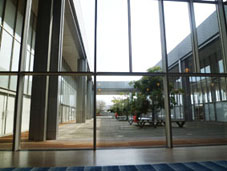 |
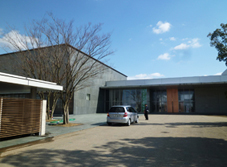
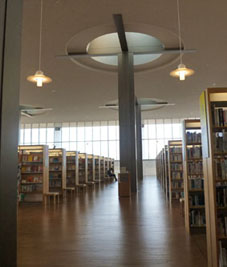
The Fukui Prefectural Library
is a work by architect Fumihiko Maki. As someone
who specializes in residential design, public buildings are completely unrelated to me, but I never tire of looking at Mr. Maki's work, and when I was a student, I would buy his portfolio and just stare at it, wondering how he could create such fascinating designs.
|
|
|
 |
|
|
|
 |
|
My photos don't quite capture the entire building design, so please search other websites as well.
|
|
|
|
 |
Ukichiro Nakaya Snow Science Museum
Official Website
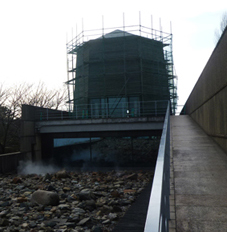
Our destination was Komatsu City, and this trip began with a plan to visit the new home of one of our members, Mr. Y, in Komatsu. Of course, since this trip was with members involved in architecture, we also stopped by buildings designed by famous architects. After the library, we visited the "Ukichiro Nakaya Snow Memorial Museum" in Kaga City, Ishikawa Prefecture. Mr. Nakaya is said to be the first person in the world to artificially create snow crystals. For more details, please see the official website above. The facility was designed by Arata Isozaki, another world-renowned architect. Unfortunately, it was undergoing repairs, and scaffolding had been erected on the exterior walls.
|
|
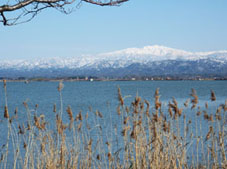
View of the Hakusan mountain range from the facility |
|
The exhibition building, as seen from the cafe,
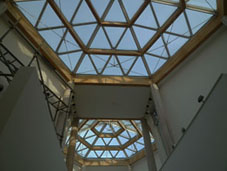
is the Snow Science Museum, so I suppose the hexagonal shape is the motif. |
|
Entrance hall ceiling |
|
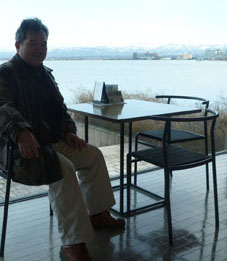
From the facility's cafe, I could enjoy a panoramic view of the Hakusan mountain range and relax comfortably. |
|
|
|
|
|
|
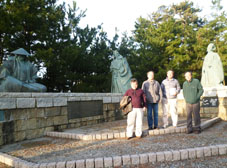
After entering Komatsu city
, I headed towards Ataka no Seki, a place associated with Minamoto no Yoshitsune. A magnificent monument (bronze statue) has been erected there, giving a glimpse into what it was like in those days.
|

|
Saionji Onsen is a hot
spring resort that has been renovated from a temple into a bathing facility.
Hot springs are a must for any trip, but I went there looking for a slightly unusual natural hot spring. After all, the waiting area and rest space are in the temple's main hall. At 400 yen per visit, I thought I'd want to go every day. |
|
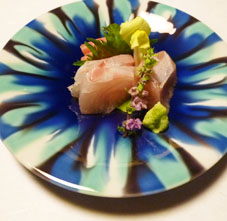
Komatsu, a restaurant specializing in kaiseki cuisine , is famous for its Kutani ware. We went to a kaiseki restaurant for dinner, and apparently the plates were made by renowned artists. We enjoyed the banquet while admiring the beautiful tableware.
|
|
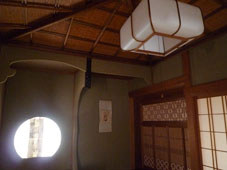
Our
accommodation was, of course, Mr. Y's new home. We looked around the house for the first time, chatted for about two hours, and then went to bed. |
|
|
|
Sunday, March 6, 2011 |
|
|
On the second day of our visit to the Asakura Isoyoshi Museum
, we first visited the Asakura Isoyoshi Museum.
This museum houses the works of the second-generation Asakura Isoyoshi. The second-generation Asakura Isoyoshi was the first ceramic artist to be awarded the Order of Culture for Kutani ware. [Details website]
|
|
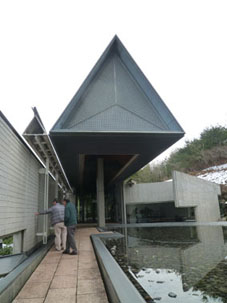
The museum was designed by architect Yoshiro Ikehara, who
apparently has received awards such as the Chubu Architectural Award. The floor plan is rather simplistic, but the details of the architecture are solid.
Hmm, however, my honest impression is that it's a little too pretentious.
|
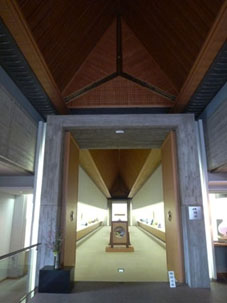
|
View of the permanent exhibition room from the entrance hall. |
|

|
Next, we visited the Kutani Ware
Museum. Inside, the characteristics of Kutani ware, which is produced through
a division of labor, were carefully explained through videos and exhibits.
|
|
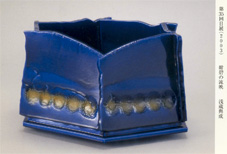
|
At the Isoyoshi Shinko Pottery
Museum, I viewed the works of the second-generation Isoyoshi Asakura, and in the afternoon, I visited the pottery studio of the current third-generation Isoyoshi Asakura, "
." The photo on the left is a work exhibited at the 35th Nitten Exhibition in 2003. It was on display in the exhibition room. |
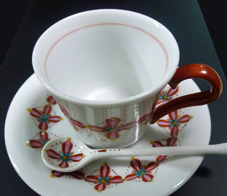
|
Ceramic artist Ichika Asakura's
: At Isoyoshi Shinko Pottery, I was guided by Ichika Asakura, the daughter
of the third-generation Isoyoshi Asakura.
As a memento, I purchased one of Ichika Asakura's works.
I think it's a design that I won't tire of.
When it comes to an artist's work, you can't really see their attitude towards their work at that time unless you go to their solo exhibition and spend an hour or two carefully looking at the collection of works.
I don't have much knowledge of pottery, so I can't tell whether a piece is good or bad.
But when you look closely at a collection of works, you can feel the feelings of the artist at that time.
|
|
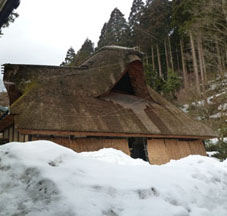
|
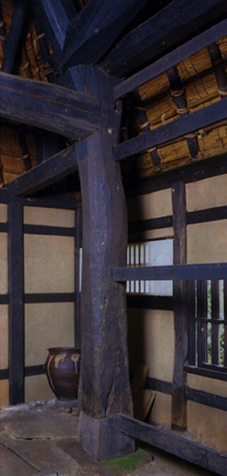
Chiko no Ie
The last stop on my trip was a visit to "Chiko no Ie," a nationally designated important cultural property.
It was apparently built in the late medieval period. In Japanese history, the late medieval period refers to the end of the Sengoku period, so this house is about 400 years old.
It's amazing, isn't it? For something that isn't a shrine or temple to stand for 400 years...
I need to work harder too. |
|
|
|
|
|
|
|






